
What is money, and how has it evolved to shape the economic interactions we rely on today? How did ancient societies overcome the limitations of barter, and what drove the transformation from physical coins to digital transactions? The journey of money from tangible goods to virtual assets reveals a fascinating story of innovation, societal needs, and technological advancements.
History of Money and Currency
Money, in its myriad forms, has been a linchpin in the development of human civilizations, facilitating trade, measuring wealth, and supporting complex societal structures. Initially, the limitations of barter systems, which rely on the direct exchange of goods and services, prompted the need for more sophisticated economic tools. This need led to the adoption of commodities like salt, cattle, and grains as mediums of exchange, chosen for their inherent value and widespread acceptance.
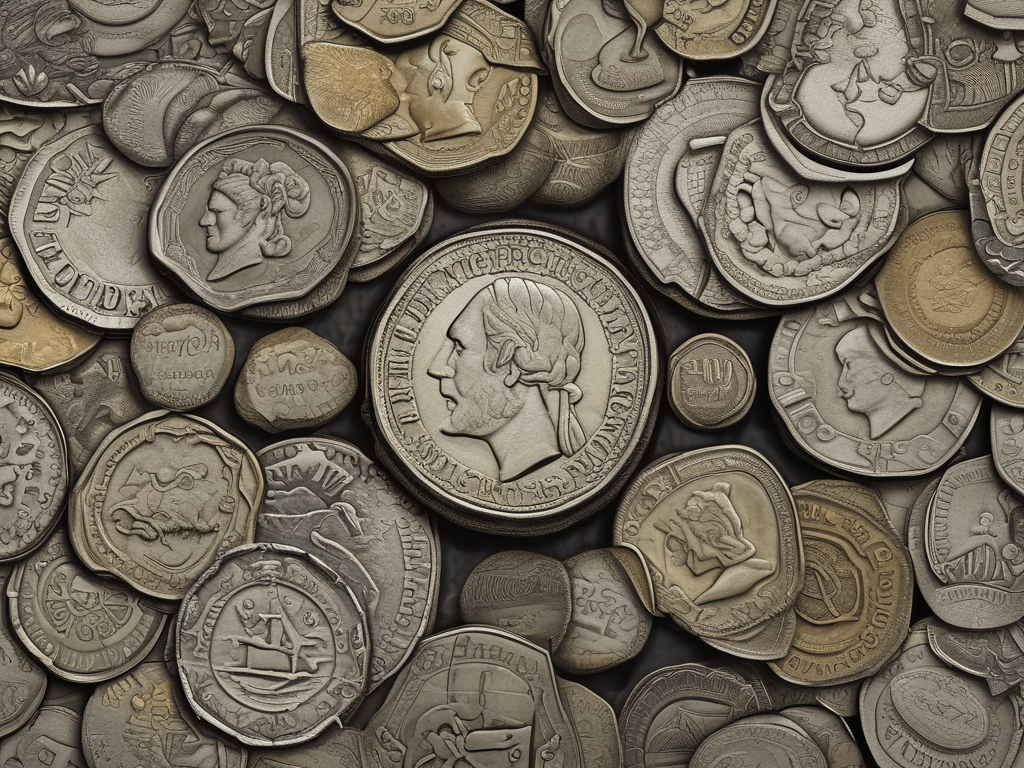
The introduction of metal money in Lydia around 600 BCE marked a significant revolution in trade, offering a durable, portable, and divisible medium of exchange. Gold, silver, and bronze quickly became the materials of choice for coins, prized for their longevity and intrinsic value. This period heralded the beginning of measured wealth and structured economic systems.
The Rise of Paper Money and Banking
The emergence of paper money in China during the Tang Dynasty (618–907 AD) represented a pivotal shift in monetary history. Paper money spread across the globe, particularly through the trade routes of medieval Europe, enhancing trade efficiency with its portability and ease of use. European banks evolved from this innovation, using promissory notes that eventually turned into banknotes, a practice that formalized with the establishment of central banks like the Bank of England in 1694. These institutions played crucial roles in stabilizing currency systems through the regulation and issuance of paper money.
Transition to Fiat Money and Beyond
The transition from commodity-backed money to fiat money—currency that derives its value from government regulation or law—came with its own set of challenges and advantages. The abandonment of the gold standard in the mid-20th century marked the full transition to fiat money, which was backed not by physical commodities but by trust in government and its stability. This system allowed for greater flexibility in monetary policy but also introduced new complexities, including inflation control and international exchange rates.
The digital revolution of the late 20th century brought about the next major shift with the introduction of electronic banking and digital transactions, setting the stage for the advent of cryptocurrencies in 2009. Bitcoin and subsequent digital currencies used blockchain technology to ensure secure, decentralized, and anonymous transactions, pushing the boundaries of what we consider ‘money’.
Barter System to Digital Currencies
Before the formalization of money, barter was the primary mode of exchange, a system where goods and services were traded directly. While it catered to immediate needs, the system was fraught with limitations, such as the lack of a common measure of value and the difficulties associated with large transactions. The inefficiencies of barter led to the development of commodity money, which was more practical due to its divisibility, portability, and uniformity. Over time, these commodities gave way to the sophisticated financial instruments and monetary systems we see today, including digital currencies that combine the advantages of historical currencies with the innovations of modern technology.
Future Trends in Money
The ongoing evolution of money continues to raise questions about the future of financial systems. Central bank digital currencies (CBDCs) are emerging as a potential new form of money that could blend the benefits of digital currency with the stability and regulatory oversight of traditional fiat currencies. As we navigate these changes, the history of money offers invaluable lessons on adaptability, the importance of trust, and the continuous need for innovation in financial systems.
In tracing the history of money, we gain a deeper understanding of not just our economic past but also the potential directions our financial systems could take in the future. Each phase of money’s evolution has been a response to the economic, technological, and social needs of the time, a trend that will undoubtedly continue as we forge new paths in the digital age.
 Daily Reflections
Leave a comment